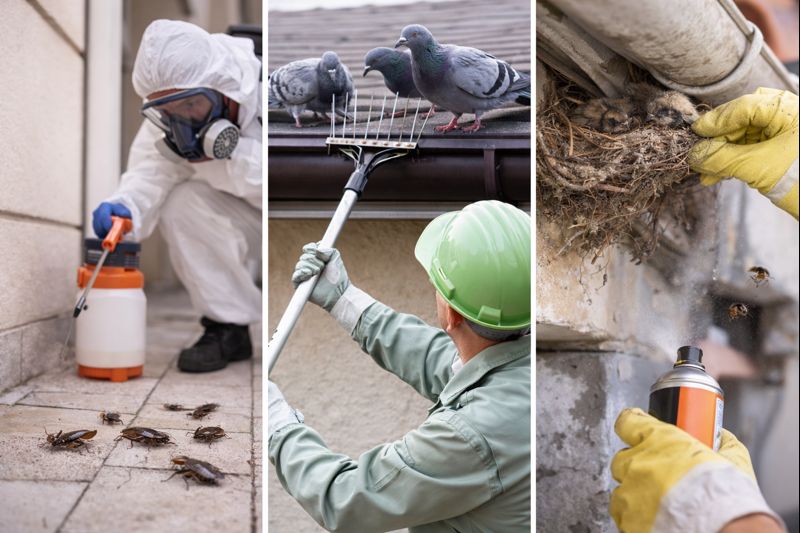
If birds are leaving droppings, nests, or damage around your property, you need fast, effective options nearby that balance safety and long-term prevention. Search for licensed local providers who offer humane exclusion, targeted removal, and proven deterrents like spikes, netting, and electronic repellents to protect your home or business.
You’ll learn what Bird Control Services Near Me cover, how professionals assess your site, and which humane methods work best for different species and structures. Knowing how to compare experience, guarantees, and eco-friendly practices helps you choose the right provider and avoid repeat problems.
Comprehensive Bird Control Services
You will find targeted options to stop nesting, remove droppings, and protect rooflines, vents, and HVAC units. Services combine physical barriers, deterrents, and site-specific strategies chosen for the bird species and the risk areas on your property.
Types of Bird Deterrents
- Physical barriers: Bird netting, stainless-steel spikes, and exclusion strips block access to ledges, eaves, and vents. Netting works well over open rafters and loading docks; spikes suit narrow perches and signs.
- Visual and auditory repellents: Reflective tape, predator decoys, and distress-call devices disrupt flock behavior. Use these where birds roost on rooflines, light poles, or signage; rotate or relocate devices to limit habituation.
- Electric track systems: Low-voltage tracks provide a short, nonlethal shock that discourages landing on beams and gutters. They perform well where persistent perching damages finishes or creates health hazards.
- Habitat modification: Remove food sources, secure garbage, and cap chimneys or vents. Combine with roofing repairs and sealing crevices to eliminate nesting sites.
- Falconry and trained raptors: Live raptors create a natural deterrent for large open areas like industrial yards and waterfronts. Deploy during peak activity hours for immediate flock dispersal.
Benefits of Professional Bird Control
You get faster, safer results when technicians assess species, entry points, and risks before choosing tools. Professionals match solutions to pigeons, starlings, gulls, or geese, avoiding wasted products and repeated visits. Technicians reduce legal and health risks by using licensed, humane exclusion methods and by removing droppings with proper PPE and sanitization. They document installations, offer maintenance plans, and handle municipal permits or protected-species rules when needed. Professional installs last longer because they account for airflow, UV exposure, and service access. This lowers long-term costs compared with DIY fixes that fail or create new hazards.
Customized Bird Management Solutions
A tailored plan starts with a site inspection that maps nesting sites, feeding areas, and flight paths. The technician identifies material needs — netting coverage in square feet, number of spike strips, or locations for ultrasonic units — and provides a written quote with service intervals. Treatment may combine immediate removal (nest and droppings cleanup), medium-term deterrents (tracks, spikes), and long-term maintenance (seasonal inspections and repairs). You receive clear timelines for installation, expected bird behavior changes, and follow-up visits. Contracts often include warranty terms, documented compliance with wildlife regulations, and emergency response options for sudden infestations. This ensures your facility stays functional while minimizing recurring bird problems.
Choosing the Right Bird Control Provider
Focus on proven methods, legal compliance, and clear pricing so you get humane, reliable results without surprises.
Factors to Consider in Local Services
Check that the provider holds any required local licenses or permits for wildlife control in your city or province. Ask for proof of insurance and a written warranty or service guarantee before any work begins.
Prioritize companies that use humane, non-lethal methods such as netting, spikes, exclusion barriers, and avian deterrents rather than poisons or illegal trapping. Request a written treatment plan that lists materials, expected timelines, and follow-up visits.
Read recent customer reviews for projects similar to yours—roofline exclusion, warehouse protection, or residential eaves—so you judge performance on comparable jobs. Confirm the company will obtain permits if nests of protected species are present and that they perform seasonal checks when necessary.
Evaluating Provider Experience
Ask how many years the company has worked on the specific species causing your problem (pigeons, starlings, gulls, swifts, etc.). Species-specific experience matters because solutions for roosting pigeons differ from those for seasonal nesting seabirds.
Request before-and-after photos and references for local jobs. Contact two or three past clients and ask about timeliness, cleanup, and whether the results met expectations. Verify technicians have formal training or certification in bird exclusion, installation standards, or wildlife handling.
Confirm the company performs a site assessment in person rather than giving estimates from photos alone. A thorough inspection identifies structural points of entry, nesting sites, and long-term attractants like food sources or drainage issues.
Comparing Service Costs
Get at least three written quotes that break down labor, materials, permits, and follow-up visits. Compare line items—netting versus spikes, one-time removal versus ongoing maintenance—so you can evaluate long-term value, not just the lowest initial price.
Beware of unusually low bids that omit permits, warranties, or seasonal monitoring. Ask whether cost includes a warranty period and what that warranty covers (re-roosting, new nests, or damage). Confirm payment terms and whether the company requires deposits or full payment on completion.
Consider lifecycle cost: durable materials and proper installation often cost more up front but reduce repeat visits. If budget is tight, request phased work: essential exclusion first, then aesthetic or long-term upgrades later.



Leave a Reply