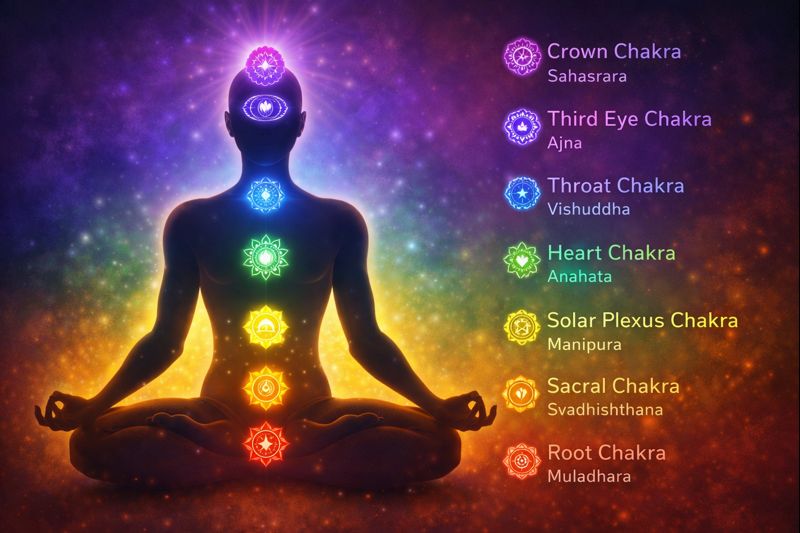
You can use drishti to sharpen focus, steady your breath, and deepen the physical and mental aspects of your practice. Drishti trains your attention by giving it a precise point, which reduces distraction and helps you hold postures with more control and calm.
Expect a practical guide that explains what drishti is, how it works in yoga, and simple techniques you can try on the mat or off it to improve concentration and presence. The next sections outline clear, usable steps to apply drishti so you can make immediate progress in balance, meditation, and everyday focus.
Understanding Drishti in Yoga
Drishti trains your eyes and mind to a specific focal point, improving balance, alignment, and concentration. It appears in both physical postures and meditative practices, with distinct types and a clear historical context that inform how you use it.
Definition and Etymology
Drishti is a Sanskrit word meaning “sight,” “gaze,” or “point of focus.” In practice, it denotes the directed gaze—either an external visual point or an internal focus—that you maintain to steady posture and attention.
The term appears across classical yoga literature and modern teachings with consistent emphasis on focus. You can apply drishti visually (soft or fixed stare) or internally (imagined point such as the third eye).
Using drishti narrows sensory input and anchors awareness. This reduction of visual wandering helps you hold balance poses and reduces mental distraction during seated practice.
Historical Origins
Drishti roots trace to classical Indic traditions where gaze and vision feature in meditation and ritual. Early references connect it to practices for cultivating inner sight and stabilizing attention during contemplative disciplines.
Later yoga lineages integrated drishti explicitly into asana practice to link posture, breath, and concentration. Teachers in modern Hatha and Ashtanga traditions standardized specific gaze points for many poses.
Although not always named in every ancient text, the functional use of a directed gaze evolved alongside pranayama and dharana (concentration) methods. You inherit both ritual and practical strands when you adopt drishti.
Types of Drishti
Common categories split into external (bahya) and internal (antar) drishti. Bahya drishti fixes your eyes on a visible target—like the tip of your nose, a point on the floor, or a distant wall—to assist balance and alignment.
Antar drishti directs inner vision to places such as the third eye (between the eyebrows) or the heart center. This internal focus supports meditation and subtle-body awareness.
Teachers often list nine traditional drishtis used in sequencing, including nose-tip (nasagrai), hand (hasta), and horizon (bhrumadhya). Choose the drishti that matches the pose: external points for dynamic balance and internal points for inward-facing postures.
Role in Meditation and Asana
In asana, drishti functions as a practical tool for physical stability and spatial orientation. Fixing your gaze reduces head movement, improves posture, and helps you maintain alignment in standing balances or inversions.
In meditation, drishti becomes a vehicle for concentration (dharana). You either rest the eyes softly on an external point or cultivate an inner focal point to withdraw from sensory distractions.
Integrating breath with drishti deepens both practices: synchronized inhale-exhale with a steady gaze refines timing, calms the nervous system, and strengthens sustained attention during longer holds or seated sittings.
Applying Drishti Techniques
Drishti trains your eyes and attention to a single point, improving steadiness, body alignment, and present-moment awareness. You will learn practical benefits, a clear practice sequence, and fixes for common difficulties so you can use drishti in both standing poses and seated meditation.
Benefits for Focus and Mindfulness
Drishti narrows sensory input, which reduces visual distractions and helps you sustain attention on breath and alignment. In balance poses like tree (vrikshasana), a steady gaze stabilizes your head and neck, making micro-adjustments easier and lowering fall risk.
Internally, holding a gaze point anchors your mind to the present moment, so intrusive thoughts lose intensity. You may notice improved task persistence off the mat after consistent practice.
Physical tension around the eyes drops when you practice soft, relaxed gazing, which reduces neck strain and prevents jaw clenching. Over weeks, repeated drishti work rewires attention habits, letting you shift from reactive to deliberate focus during stressful situations.
Step-by-Step Practice Guide
- Choose a drishti point:
- External: a spot on the wall, a fingertip, or a steady floor mark.
- Internal: the space between the eyebrows (third eye) or the tip of the nose.
- Set posture and breath:
- Stand or sit tall, relax shoulders, and take three slow diaphragmatic breaths.
- Soften the eyelids; keep ocular muscles relaxed.
- Apply the gaze:
- Fix your eyes on the chosen point for 20–60 seconds per attempt.
- Pair with a single-count inhale and exhale to keep rhythm.
- Progression:
- Start with eyes-open external drishti during balance poses.
- Move to gentle internal gazing in seated practice, increasing duration gradually.
- Integration tips:
- Use drishti during transitions to maintain alignment.
- Log short daily sessions (5–10 minutes) and track improvements.
Common Challenges and Solutions
You may feel eye strain or a darting gaze at first. Remedy this by shortening attempts to 10–15 seconds and deliberately relaxing your brow and jaw between sets.
If your mind wanders, label the distraction briefly (“thinking”) and return to the point; don’t chase every thought.
Balance loss often stems from tension elsewhere. Soften knees and micro-adjust foot position rather than forcing the gaze.
When internal drishti induces dizziness, open your eyes and refocus on an external spot until equilibrium returns. Gradual, consistent practice reduces these issues over time.



Leave a Reply