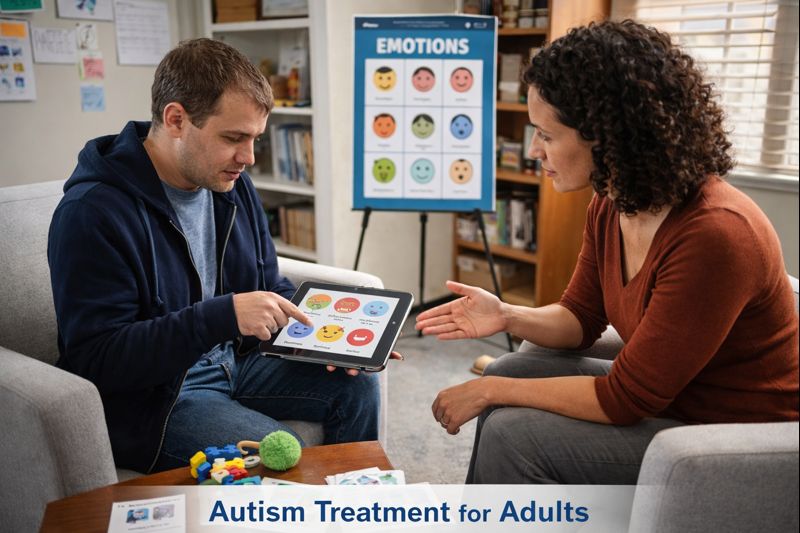
You can get practical, evidence-based support that reduces anxiety, improves coping skills, and builds everyday independence—no matter where you are on the autism spectrum. Many effective adult treatments combine targeted therapies (like CBT and behavioral approaches), personalized supports, and, when needed, medication to manage co-occurring conditions so you can focus on skills that matter in daily life.
This article walks through Autism Treatment Adults options, proven treatment approaches, and straightforward supportive strategies to boost quality of life. Expect clear guidance on what works, who it helps, and how to find the right professional or program for your situation.
Evidence-Based Autism Treatment Options for Adults
These treatments target communication, daily living skills, mood and behavior regulation, and sensory differences. You will find behavioral approaches, medication strategies, and counseling methods that have the strongest research support and practical utility for adults.
Behavioral Therapies for Adults
Behavioral therapies focus on skill-building and reducing behaviors that interfere with your goals. Applied Behavior Analysis (ABA) for adults adapts reinforcement strategies to teach workplace skills, daily living routines, and social interactions. Behavioral interventions often set measurable goals, track progress, and use structured prompts that fade over time.
Social skills training gives you concrete practices—role-play, video modeling, and feedback—to improve conversation turn-taking, nonverbal cues, and job interview performance. For sensory and routine-related challenges, task analysis and environmental modifications reduce overload and improve independence. Choose programs that individualize goals, involve realistic settings (workplace, home), and include caregiver or employer coordination.
Medication Management
Medication does not treat autism itself but can reduce co-occurring symptoms that limit functioning. You and your prescriber should target specific issues: SSRIs or other antidepressants for persistent anxiety or depression; stimulants or atomoxetine for attention and hyperactivity symptoms; and atypical antipsychotics for severe irritability or aggression when behavioral strategies alone are insufficient.
Start with a clear symptom target, use the lowest effective dose, and monitor side effects closely—weight gain, metabolic changes, sleep disruption, or increased anxiety can occur. Combine medication with behavioral supports and regular outcome tracking. If you have multiple prescribers, maintain shared records and periodic medication reviews every 3–6 months or sooner if symptoms change.
Psychological Counseling
Cognitive Behavioral Therapy (CBT) adapted for autism helps you identify and change unhelpful thoughts and practice coping skills for anxiety and depression. Therapists modify CBT with visual supports, concrete examples, and slower pacing to match your processing and communication style.
Therapy can include emotion regulation training, acceptance and commitment strategies, and trauma-informed approaches when relevant. Group therapy provides peer practice for social skills and reduces isolation. Prioritize therapists experienced with autistic adults, who will tailor session structure, use clear agendas, and coordinate with other supports such as occupational therapy or case management.
Enhancing Quality of Life With Supportive Strategies
You can increase daily independence, social confidence, and job success through targeted training, workplace adjustments, and practical tech tools. Each approach focuses on measurable skills, routine supports, and devices or software that reduce barriers to functioning.
Social Skills Training
Social skills training should target specific behaviors you want to change, like initiating conversations, reading nonverbal cues, or managing misunderstandings. Work with a clinician who uses evidence-based methods such as role-play, video modeling, and structured feedback; these let you practice real-life interactions in a safe setting.
Set concrete, short-term goals (e.g., make one new peer contact per week) and track progress with simple logs or rating scales. Group formats build peer learning and offer repeated practice with varied partners. Consider combining training with coaching in sensory regulation and anxiety management so social gains transfer to community settings.
Vocational and Educational Support
Focus on job matching, skill coaching, and on-the-job accommodations that address your strengths and barriers. Request a vocational assessment that identifies tasks you do well and those needing support; use that to negotiate specific accommodations like written instructions, extended training time, or a quiet workspace.
Supported employment services or disability services at schools can provide job coaches, task breakdowns, and employer education. Learn workplace routines through task lists, checklists, or visual schedules. Track outcomes such as hours worked, retention, and job satisfaction to adjust supports over time.
Assistive Technology Solutions
Choose assistive technology that solves a clear functional problem—communication, organization, sensory modulation, or navigation. For communication, use augmentative and alternative communication (AAC) apps or simple text-to-speech tools if verbal expression is limited. For organization, adopt task-management apps with reminders, visual timers, and calendar syncing.
For sensory regulation, try noise-cancelling headphones, wearable vibration tools, or lighting adjustments controlled by smart switches. Evaluate devices in the environments where you’ll use them and train on realistic tasks. Keep a short checklist to measure effectiveness (ease of use, reliability, reduction in errors) and replace or modify tools based on those results.





Leave a Reply