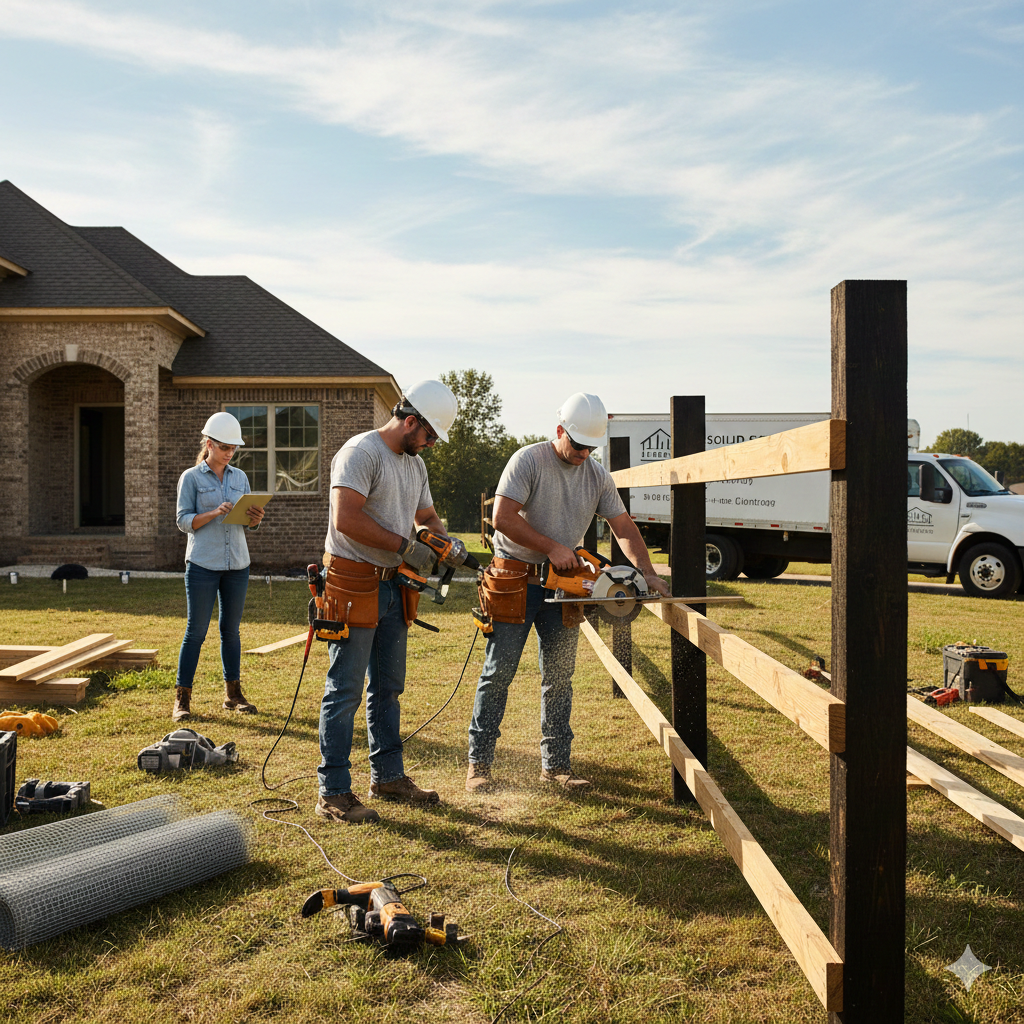
Looking for a fence company near you means more than hiring someone to put up wood or metal — it means protecting your property, adding curb appeal, and getting work done on time and within budget. To find the right local contractor, focus on companies with clear pricing, verified reviews, and experience handling the specific type of fence you want; that will save you time and money while avoiding surprises.
You’ll learn how to compare quotes, check credentials, and understand typical installation steps so you can make a confident decision when searching for a fence company near me. The next sections walk through what to look for when choosing a local pro and what to expect during the installation process, so you can plan with clarity and avoid common pitfalls.
Choosing the Right Fence Company Near Me
You want a contractor who matches your budget, timeline, and local code requirements while delivering quality materials and workmanship. Focus on verification, clear estimates, and examples of similar jobs to make a confident choice.
Factors to Consider When Selecting a Fence Contractor
Check licensing and insurance first. Confirm the contractor carries general liability and workers’ compensation and ask for certificate numbers you can verify with your insurer or state board.
Request a written estimate that breaks down material, labor, permits, and cleanup. Compare at least three bids and watch for unusually low prices that skip permitting or use inferior materials.
Review recent local references and photos of completed jobs similar to yours—look for examples matching your intended material, height, and terrain. Ask about warranty terms for both materials and installation, and get warranty details in writing.
Confirm who handles permits and utility locates. Clarify timelines, payment schedule (avoid large up-front payments), and how change orders are handled so you avoid surprises.
Benefits of Hiring Local Fencing Professionals
Local contractors understand municipal setback, height, and easement rules affecting your parcel. They’ve likely dealt with the city or county permitting office and can speed approvals.
You gain quicker service for repairs and warranty work because the crew is nearby. That reduces travel costs and often shortens response times for callbacks or damage remediation.
Local pros can source materials suited to your climate—pressure-treated wood, galvanized steel, or composite rated for local humidity and freeze-thaw conditions. That choice extends fence life and reduces maintenance.
Working with a nearby company also gives you access to neighborhood references and visible recent work sites you can inspect in person.
Common Types of Fencing Services Offered
Most fence companies provide: new installations, full replacement, board-by-board repairs, gate fabrication/automation, and staining or sealing. Ask whether the crew self-performs excavation, concrete footings, and post-setting or hires subcontractors.
Material options typically include wood (privacy, picket), chain-link (security, budget), vinyl/composite (low maintenance), and metal (aluminum, wrought iron). Request product specifications—gauge, post spacing, and warranty length—for direct comparison.
Additional services can include site grading, retaining walls tied to fence lines, and HOA-compliant color or style matching. If you need a permit, ask whether the contractor prepares and submits drawings and boundary confirmations.
Process of Installing a Fence
You’ll see what the crew inspects, how materials get chosen, and the typical timeline from permit to final post. The steps focus on property lines, material fit, and scheduling to minimize surprises.
Initial Consultation and Site Assessment
A contractor will meet you on site to confirm property lines and locate underground utilities. Expect them to ask about intended use—privacy, security, pet containment—and note terrain features like slopes, retaining walls, and drainage that affect post depth and layout.
They’ll measure exact fence length and mark corners and gate locations. Ask for a written site sketch showing setbacks and any required easements; this prevents disputes later.
Permits and local codes get reviewed during this visit. If a permit is needed, the company often handles application; you should verify who pays permit fees and who signs plans.
Material Selection and Customization Options
Decide the fence material based on durability, maintenance, and appearance: pressure-treated wood, cedar, vinyl, aluminum, chain-link, or composite. Each has trade-offs—wood looks natural but needs staining, vinyl resists rot but costs more upfront.
Discuss post type and foundation: concrete-set posts for wind-prone areas, or gravel-set for better drainage. Choose hardware and finish options—self-closing hinges, privacy slats, powder-coated metal, or decorative post caps—to match style and function.
Get a written estimate that lists material brands, board thickness, post dimensions, and warranty terms. Ask for color samples or photos of completed jobs to confirm the look before work begins.
Installation Timelines and Project Planning
A typical residential install takes one to four days for a straightforward property under half an acre. Complex jobs—steep grades, many gates, or municipal inspections—can extend to a week or more.
Crew arrival usually follows final material ordering and permit approval. On day one they dig post holes and set posts in concrete; subsequent days include rail attachment, panel or board installation, and gate hanging.
Plan for weather delays and utility marking windows. Confirm daily start times, expected noise, debris removal procedures, and a final walkthrough date to inspect alignment, gate operation, and any touch-up needs.




Leave a Reply