You depend on copper every day—inside your phone, your home wiring, and the electric vehicles reshaping transport—so understanding how it gets from the ground to those products matters. Copper mining supplies the metal that powers modern infrastructure and clean technologies, and this article shows how mines, processing methods, and economics connect to the items you use and the markets that affect their price.
You will get a clear overview of where copper comes from, how extraction and processing work, and why those steps matter for the economy and environment. Keep reading to learn the practical impacts of mining decisions, the basics of processing, and what rising demand means for communities and global markets.
Copper Mining Overview
You will find where the largest copper comes from, how miners extract it, and the common ore types that determine processing methods. Expect specifics on country production, primary mining techniques, and the mineralogy that guides economics and environmental choices.
Major Copper Mining Countries
Chile leads global copper production, supplying roughly a quarter of mined copper and hosting large porphyry deposits such as Escondida. Peru and China follow as top producers, with Peru notable for both large open pits and high-grade underground operations.
The United States, Zambia, Mexico, and Australia each contribute significant output. Canada produces several hundred thousand tonnes annually, with British Columbia as a major provincial source. State-owned enterprises—Codelco in Chile, for example—play outsized roles in national production and investment decisions.
You should note that production concentration affects supply risk and project economics. Regions with established infrastructure and ports lower transport costs, while politically stable jurisdictions reduce permitting and investment uncertainty.
Mining Methods for Copper
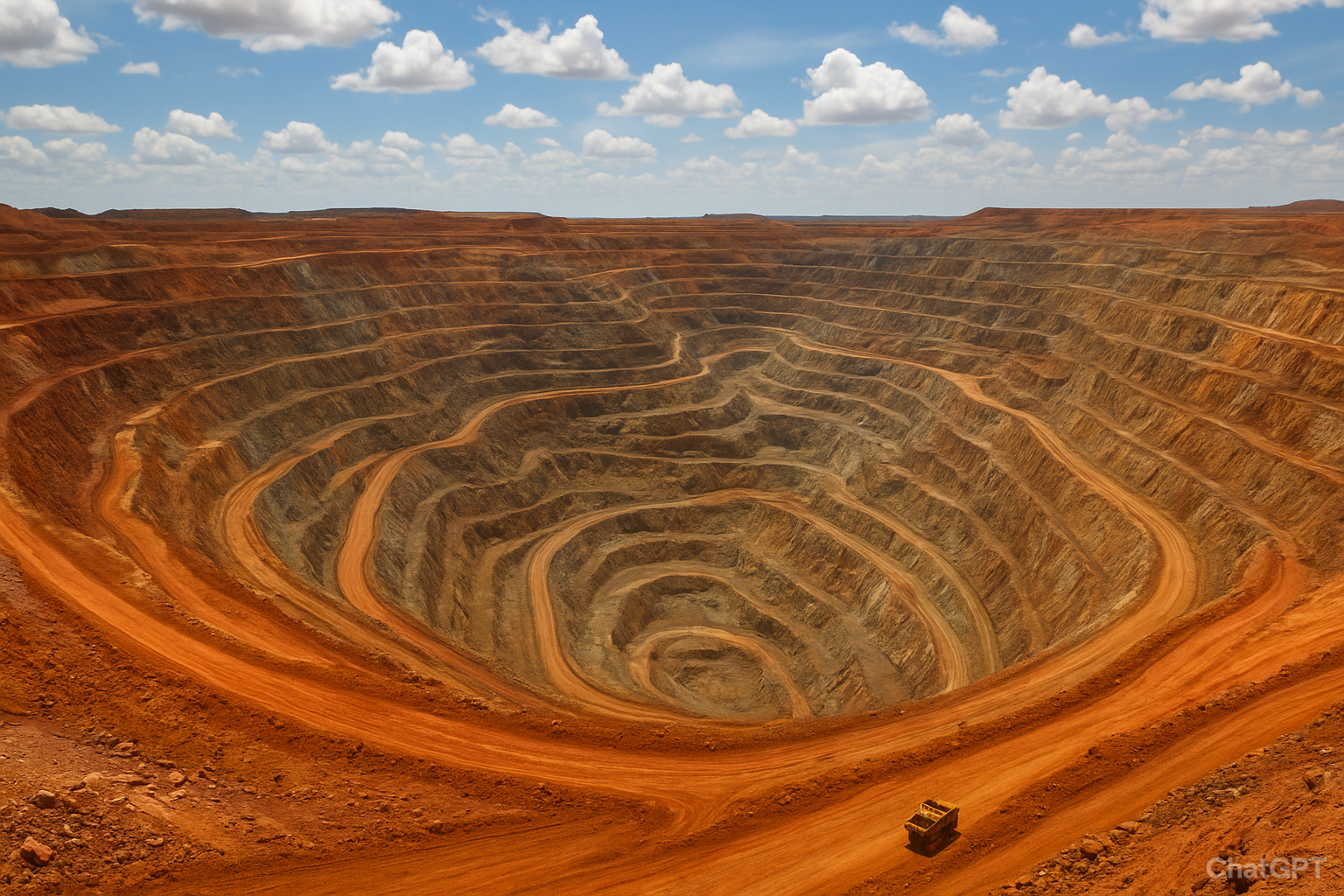
Open-pit mining dominates when ore bodies are near surface and extensive, offering lower unit costs through bulk excavation and large-scale hauling. You will see drilling, blasting, and haul-truck fleets in these operations, followed by crushing and milling to liberate copper minerals.
Underground mining applies when deposits are deep or geologically constrained. Methods include block caving for massive, low-grade orebodies and cut-and-fill or longhole stoping for higher-grade veins. Each method changes capital intensity, worker safety needs, and environmental footprint.
Hydrometallurgical techniques, such as solvent extraction–electrowinning (SX-EW), recover copper directly from oxide ores or leach solutions. Flotation concentrates sulfide ores before smelting or hydrometallurgy. Your choice of method depends on depth, grade, ore type, and local environmental and water-management constraints.
Types of Copper Ore
Copper occurs mainly as sulfide and oxide minerals, and each type dictates processing routes. Common sulfides include chalcopyrite, chalcocite, and bornite; these require crushing, grinding, and flotation to produce concentrates for smelting or further hydrometallurgical processing.
Oxide ores, such as malachite and azurite, respond well to leaching and SX-EW, which can be lower cost and generate less concentrate handling. Mixed ores present metallurgical complexity; you may need a hybrid processing plant combining flotation and leaching circuits.
Grade and mineralogy influence recovery rates and economic viability. You should assess copper percentage, the presence of deleterious elements (e.g., arsenic), and associated metals like gold and molybdenum, since they affect revenue, processing choices, and environmental controls.
Copper Processing and Economic Impact
You will learn how copper is extracted and refined, the main environmental risks and mitigation options, where copper is used most, and the market forces shaping price and supply.
Copper Extraction Techniques
You encounter two primary extraction routes: open-pit/underground mining for sulfide ores and heap leach/solvent extraction-electrowinning (SX-EW) for oxide ores. Open-pit operations use drilling, blasting, and large shovels or loaders to move ore; underground methods apply cut-and-fill or block caving depending on ore geometry.
Crushing, grinding, and flotation concentrate sulfide ores to produce copper concentrate (typically 20–35% Cu). For oxide ores, heap leaching with sulfuric acid dissolves copper, then SX-EW recovers cathode copper at >99% purity.
Smelting and refining follow for concentrates: concentrates are roasted, smelted to produce blister copper (~98–99% Cu), then refined electrolytically to cathode copper. You should note processing time and capital: new mines can take over a decade to reach production, which affects supply responsiveness.
Environmental Considerations in Copper Mining
You must address water use, tailings, and greenhouse gases as primary environmental concerns. Tailings dams store processing waste; failures and seepage risk soil and groundwater contamination with heavy metals and acidity. Operators increasingly use filtered tailings, dry stacking, and improved monitoring to reduce those risks.
Heap leach operations pose acid or saline drainage risks; liners and leak detection systems lower contamination chances. Energy use from smelting and grinding drives scope 1 and 2 emissions; switching to lower-carbon power and electrified equipment reduces carbon intensity.
Reclamation planning, progressive closure, and community agreements affect your social license to operate. Regulatory compliance, third-party audits, and rehabilitation bonds are common mitigation tools you should expect to encounter.
Applications of Copper
Copper’s electrical conductivity makes it essential in power systems, wiring, and motors. You’ll find copper in power transmission lines, distribution cables, building wiring, and electric vehicle (EV) motors and wiring harnesses. A single EV can use 60–120 kg of copper depending on vehicle type and architecture.
Copper’s thermal conductivity and corrosion resistance suit heat exchangers, plumbing, and industrial equipment. Renewable energy systems—wind turbines, solar inverters, grid-scale storage—also require substantial copper inputs.
Beyond electrical uses, copper alloys (brass, bronze) appear in construction fittings, bearings, and marine hardware. Demand patterns closely track infrastructure investment and electrification trends you monitor for forecasting.
Copper Market Trends
You should watch supply delays, lead times, and long development cycles that constrain near-term availability. New mine development typically averages around 17 years from discovery to first production, so production cannot quickly respond to price spikes.
Demand growth stems from electrification: utility grids, EV adoption, and renewable deployment. Price sensitivity links to Chinese industrial activity and construction demand; copper often acts as an economic bellwether.
Policy and classification also matter: governments treating copper as a critical mineral can accelerate permitting or incentives. Processing fees, smelter capacity constraints, and sustainability requirements influence netbacks and regional competitive advantage.





Leave a Reply