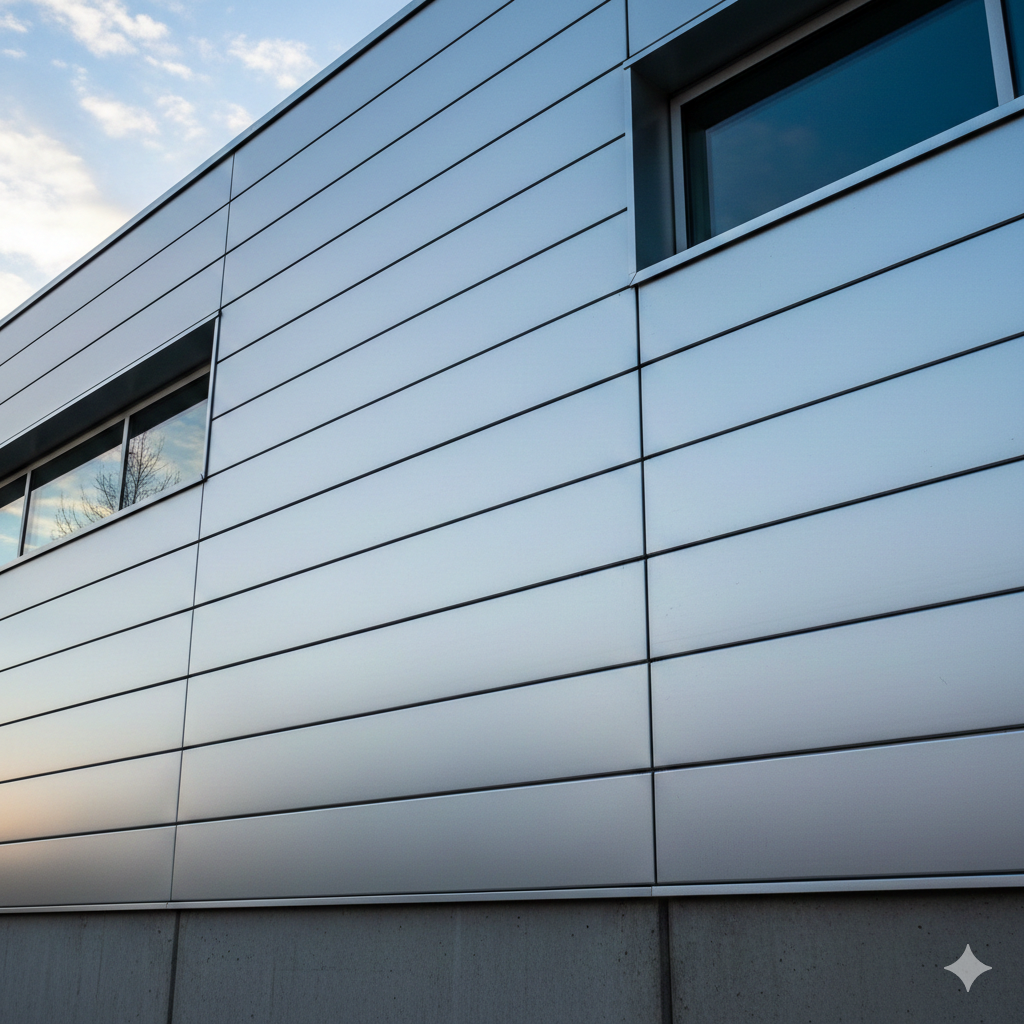
You want an aluminum cladding supplier who delivers durable materials, reliable lead times, and compliant installation support — and you need to know how to spot one fast. Choose a supplier that offers proven product options (ACM panels, extruded aluminum, perforated panels), clear performance data, and local availability so your project stays on schedule and meets code.
This article walks you through practical selection criteria of cladding supplier, from material specs and finishes to fire rating and installer support, so you can compare suppliers with confidence. You’ll learn what questions to ask suppliers and which project details matter most to protect budget, timeline, and long-term performance.
Choosing the Right Aluminum Cladding Supplier
You need a supplier who meets technical standards, offers the right product options, guarantees material quality, and delivers on schedule. Focus on certifications, product range, testing procedures, and realistic lead times to reduce risk on your project.
Supplier Certifications and Industry Standards
Verify certifications that matter to your project scope. Look for ISO 9001 for quality management, ASTM or EN standards for material properties, and fire-safety ratings such as NFPA 285 or EN 13501 where applicable.
If you specify PVDF or coil-coated finishes, request documentation for coating performance (AAMA 2605 or equivalent). Ask suppliers for batch-level mill certificates showing alloy (e.g., 3003, 5005), temper, and thickness.
Confirm third-party test reports for water penetration, wind-load performance, and corrosion resistance if your façade faces harsh marine or industrial environments. Keep copies of certificates in your project records.
Range of Aluminum Cladding Products Offered
Choose a supplier whose portfolio matches your design and performance needs. Check whether they stock aluminum composite panels (ACPs), solid aluminum panels, perforated panels, and rainscreen systems.
Confirm available alloys, standard thicknesses (for ACP cores and face sheets), and finish options like PVDF, polyester, anodized, or mill finish. Request color matching capabilities and samples for your façade colors.
Evaluate compatibility with attachment systems and insulation types. If you need custom profiles, verify minimum order quantities and tooling lead times before committing.
Quality Assurance and Material Testing
Ask about the supplier’s QA procedures across production, finishing, and packing. Suppliers should perform incoming material inspections, dimensional checks, coating adhesion tests, and final visual inspections.
Request recent test reports for coating adhesion, salt spray (corrosion), and UV/weathering resistance relevant to your climate. For ACP, confirm core composition and combustibility test results.
Insist on traceability: each pallet or panel should be traceable to a mill certificate and batch number. Specify acceptance criteria in your purchase order to avoid disputes on delivery.
Turnaround Time and Delivery Options
Clarify standard lead times and contingency plans for rush orders. Typical delivery windows vary by product and finish—stock panels ship faster than custom profiles or special coatings.
Ask about staging and partial deliveries if your project phases require them. Confirm logistics capabilities: in-house freight, partner carriers, export documentation, and site delivery options like crane-offload.
Request written delivery schedules and penalties or remedies for missed dates. That gives you leverage to align subcontractors and avoid costly on-site delays.
Key Considerations for Aluminum Cladding Projects
Assess material options, fabrication limits, environmental performance, and the level of supplier support you’ll need to keep schedule, budget, and compliance on track.
Custom Fabrication Capabilities
You need a supplier that matches your project’s complexity and tolerances. Confirm available panel sizes, minimum bend radii, and maximum run lengths to avoid onsite seams or extra joins.
Ask whether they offer CNC routing, brake-press forming, waterjet cutting, and factory-applied finishes (PVDF, fluoropolymer, anodizing). These capabilities determine edge details, returns, and integrated flashings you can achieve.
Request samples and a test mock-up to verify fit, color, and joint performance before full production. Check lead times for bespoke profiles and whether the supplier holds backup stock of standard profiles to accommodate change orders or damage replacements.
Sustainability and Environmental Impact
You should evaluate recycled-content, lifecycle emissions, and end-of-life recyclability when comparing suppliers. Ask for documented recycled aluminum percentage, supplier energy sources for smelting/rolling, and any Environmental Product Declarations (EPDs) or ISO 14001 certification.
Consider finish systems: PVDF coatings add weathering protection but affect VOCs and maintenance; anodized finishes improve durability with minimal recoat needs. Confirm that pretreatment processes avoid heavy chromates or other restricted substances in your jurisdiction.
Factor in transport distance and packaging reuse to reduce embodied carbon. Prioritize suppliers who track material traceability, provide reclaim programs, or accept panel returns for recycling to minimize landfill disposal at renovation or demolition.
Support Services and Technical Expertise
You rely on supplier expertise to reduce risk during design, manufacture, and installation. Verify they provide shop drawings, BIM files, and wind/structural calculations tailored to your façade geometry and local code loads.
Check whether they offer on-site or remote installation support, mock-up supervision, and quality-assurance inspection reports. Training for installers and documented installation sequences prevent warranty issues and water intrusion.
Confirm warranty terms, lead-time guarantees, and a clear process for handling nonconformances. A supplier that collaborates with your design team on detailing, thermal breaks, and attachment systems will save you time and change-order costs.



Leave a Reply